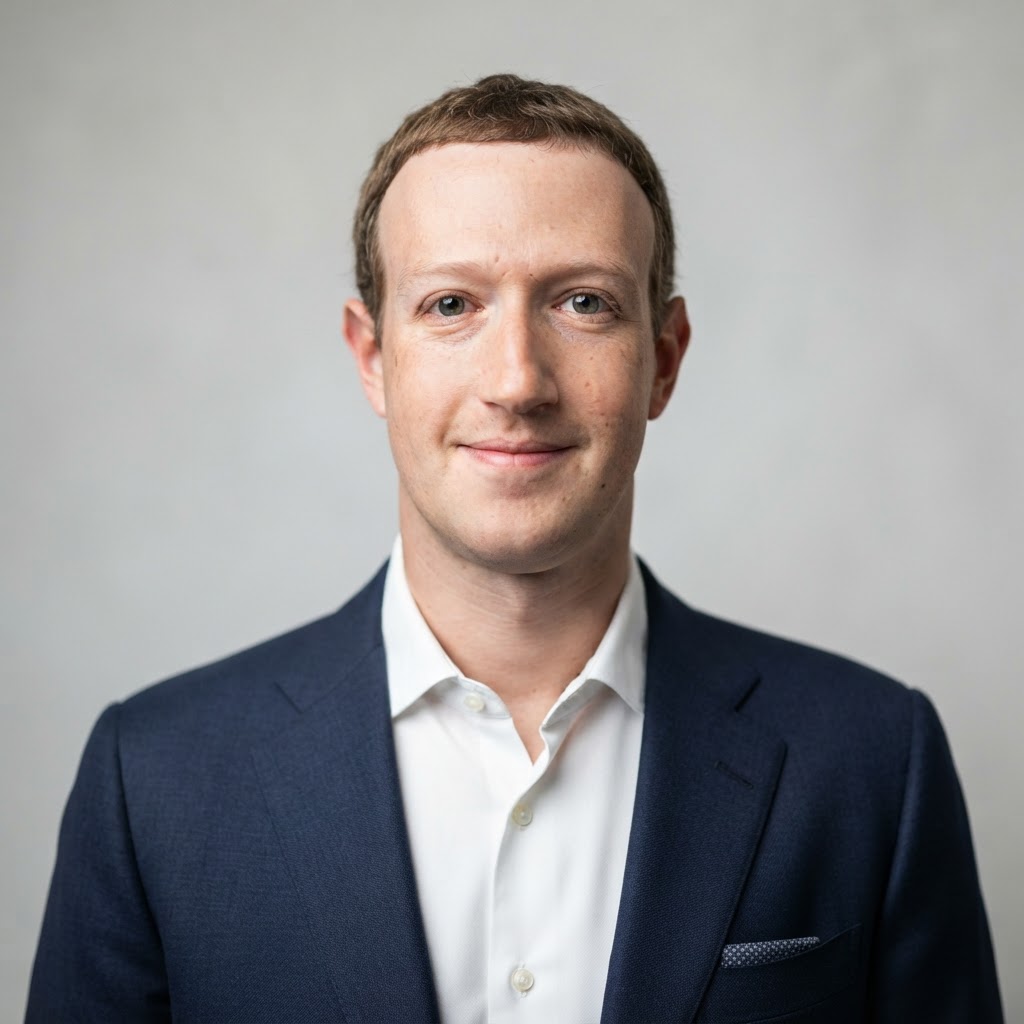
Mark Zuckerberg · Meta
"Within five years, billions of people will have personal AI agents."
In a widely discussed set of remarks, Mark Zuckerberg laid out a prediction that few in the audience expected to hear so plainly: within roughly five years, he believes, billions of people will have their own personal AI agents. Not agents available to developers, or to enterprises, or to the small slice of users who know how to find them — agents woven into the everyday computing experience of the population as a whole. The framing was deliberately population-scale, and it was delivered with the confidence of someone who has watched consumer technology adoption move from nonexistent to universal more than once in his career.
Zuckerberg's reasoning began with the trajectory of the models themselves. He pointed out that the rate at which frontier models are becoming capable of genuinely useful agentic behavior — reasoning, taking actions, maintaining context across tasks — is accelerating faster than any comparable shift the industry has seen. The implication was that the question is no longer whether an individual user's agent can be helpful, but how quickly the cost and latency of running that agent fall to a point where every phone, every laptop, every browser session can simply have one running by default.
The second pillar of the prediction was personalization. Zuckerberg described a world in which the personal AI agent is not a generic assistant that every user gets the same answers, but an agent that has a continuous, private understanding of your context — your schedule, your files, your preferences, your prior decisions. He made the case that the value of an AI agent only becomes compelling at consumer scale when it is genuinely personal, and that the infrastructure to make that personalization private, secure, and efficient is the part of the work that is most easily underestimated.
He addressed head-on the question of who builds and runs these agents. Zuckerberg's view was that the open ecosystem will be one of the most important forces in making the prediction true. He said that if every personal agent is controlled by a single company, the adoption curve will be slower and the trust will be weaker. The open models, the open tooling, and the ability for developers and users to shape and inspect their own agents are, in his framing, the conditions under which billions of people adopt agents rather than millions.
Zuckerberg also drew the distinction between the agent and the applications it orchestrates. He described a model in which the personal agent becomes the interface through which users reach every other piece of software — the calendar, the documents, the payments, the communications. The prediction was not that everyone will have a chatbot; the prediction was that the agent becomes the primary computing surface, and the applications users see today become capabilities the agent calls on behalf of the user. For the founders and investors mapping the consumer AI landscape, the implication was that the platform layer is moving.
The time frame drew the sharpest reaction. Five years is, in Zuckerberg's tone, not aspirational but analytical — derived from the rate of model improvement, the rate of cost reduction, and the rate at which hardware on the edge becomes capable of running meaningful models. He acknowledged the prediction could be wrong, but he insisted that the direction is not in doubt: the population is moving from computing without personal AI to computing with personal AI, and the only open question is the date, not the outcome.
Finally, he connected the prediction back to what Meta and the broader industry have already shipped. He said the features that exist today — assistants inside messaging apps, in-product summarization, agentic tools for developers — are the earliest, least-personal versions of the layer he is describing. The five-year prediction is a bet on whether the gap between those early features and a personal agent for every person narrows on the schedule he expects, not whether it narrows at all.
Key takeaways
- · Zuckerberg predicts personal AI agents for billions of people within roughly five years.
- · The value is in genuine personalization — private, continuous context per user — not a generic assistant.
- · An open ecosystem is a key condition for reaching population-scale adoption.
- · The agent becomes the primary computing surface; today's apps become capabilities it calls on the user's behalf.