SpaceX to Build $24 Billion Supercomputer Facility and Gas Power Plant in Texas
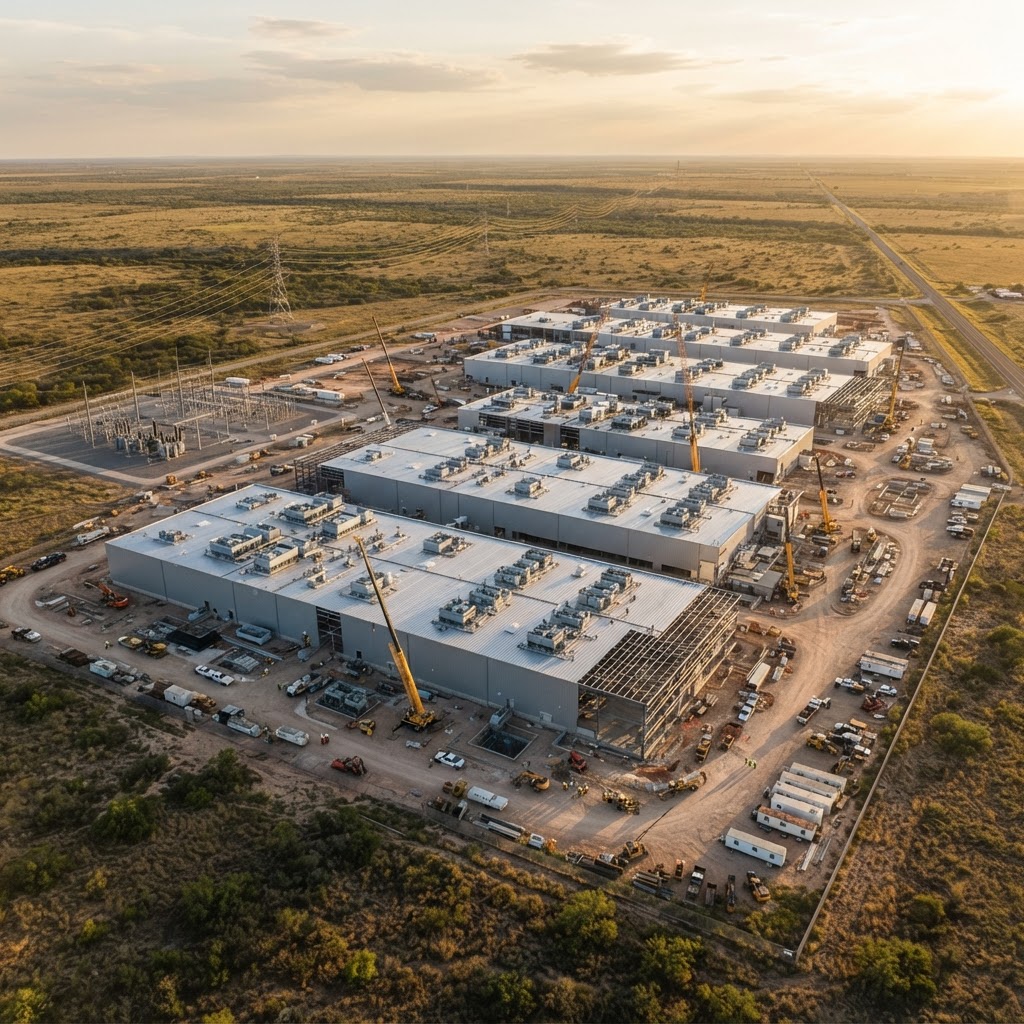
A public hearing notice reveals SpaceX intends to construct, own and operate a gas-fired power plant and a super-compute campus at its Starbase company town — one of the largest private capital commitments ever proposed in the Rio Grande Valley.
SpaceX is preparing to build a roughly $24 billion natural gas-fired power plant and super-compute facility at Starbase, the company town it has built on the Texas Gulf Coast. The scope of the plan emerged this week through a public hearing notice posted by the City of Starbase, which describes the $24 billion figure as the estimated capital investment for the initial phases of the project.
According to the notice, SpaceX would not merely buy power from an outside utility or lease space in someone else's data center. The company intends to construct, own and operate the infrastructure itself — from generation through computation.
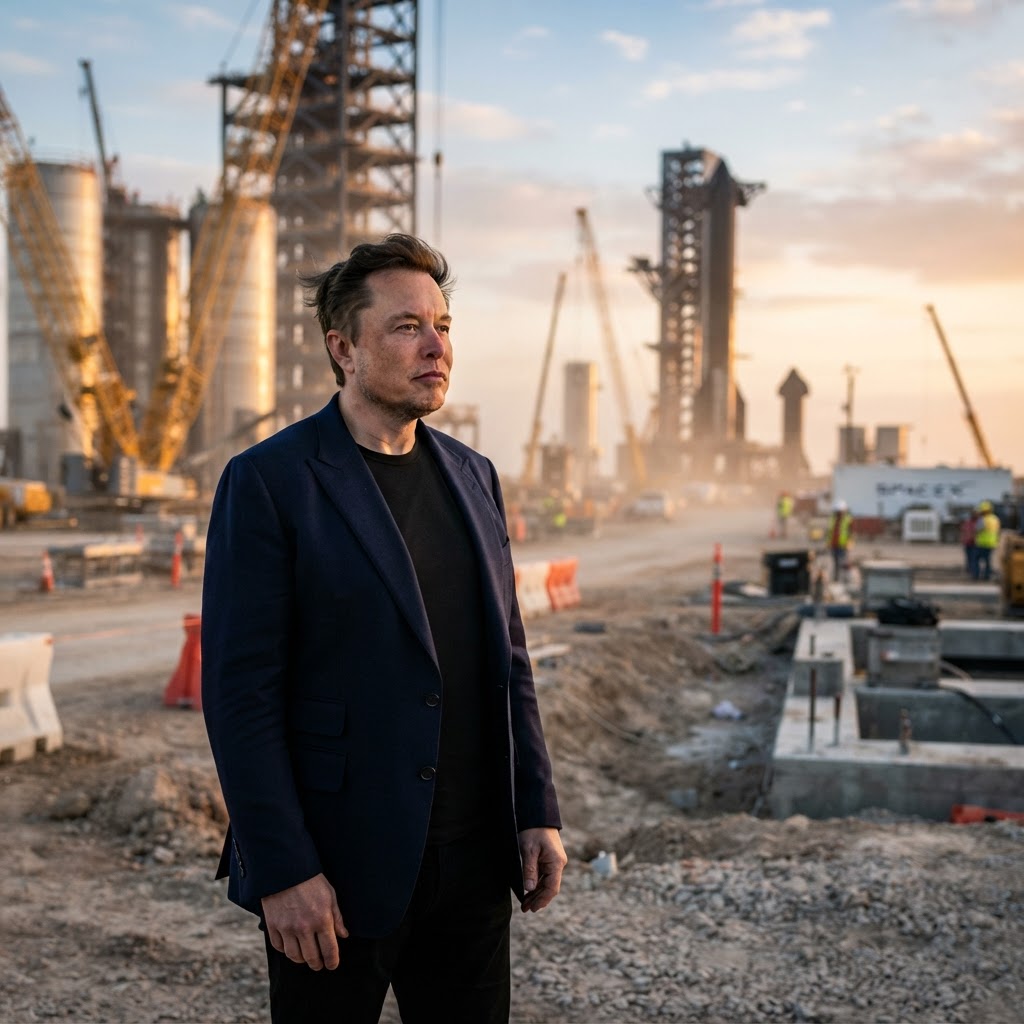
Elon Musk, chief executive of SpaceX, has pushed the company deeper into artificial intelligence infrastructure.
One of the largest private bets in the Rio Grande Valley
At roughly $24 billion for the opening stages alone, the buildout would rank among the biggest private capital commitments ever proposed in the Rio Grande Valley, a region that has historically attracted investment for agriculture, logistics and, more recently, spaceflight.
The notice indicates the project may be delivered in multiple phases and could be expanded further over time. It does not disclose the generating capacity of the plant, the size of the computing campus, or the length and dollar value of the property tax relief SpaceX is seeking.
Those blanks matter. In an era when the largest technology companies are spending tens of billions on AI capacity, the two variables that determine whether a project of this kind pays off are megawatts and utilization — how much power the site can secure, and whether enough demand exists to keep the processors busy.
The city commission will decide in December
The Starbase City Commission is scheduled to formally review the property tax abatement and a related economic development agreement at a public meeting on December 9. That vote is the first real gate for the project: without an abatement, the economics of a capital-intensive, decades-long asset change materially.
Starbase, once known as Boca Chica, is the site of SpaceX's Starship manufacturing and launch operations. Over the past several years the company has steadily built out the surrounding land and pressed local authorities for the infrastructure that a permanent industrial base requires.
Power is the bottleneck, not chips
For most of the past decade the constraint on artificial intelligence was silicon. That has changed. Grid interconnection queues now stretch years in many markets, transformers and turbines face multi-year lead times, and utilities are increasingly wary of dedicating scarce capacity to a single customer.
Building generation on site is a way around that queue. A gas-fired plant can be permitted and energized faster than new nuclear or large-scale transmission, and it can run continuously — a critical property for training runs that cannot tolerate interruption.
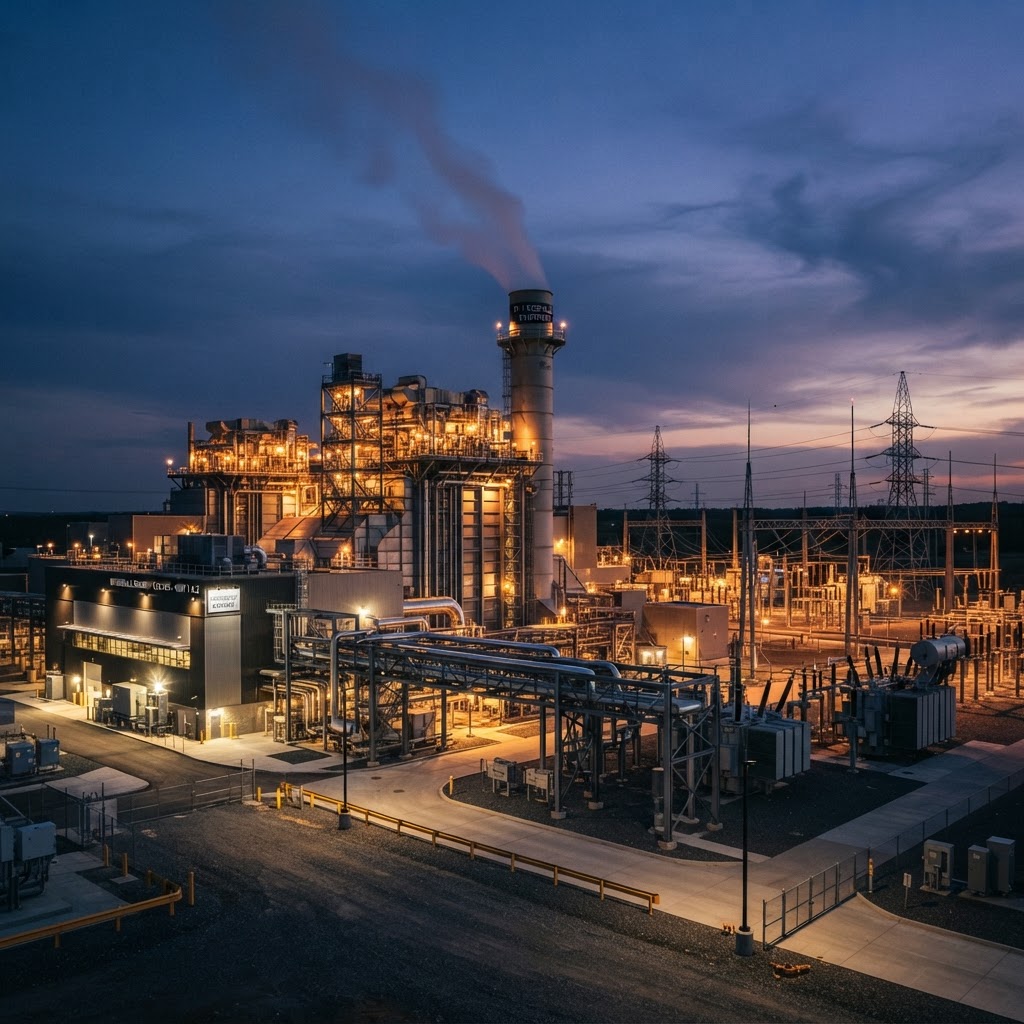
Gas-fired generation can be brought online faster than new transmission or nuclear capacity, making it the default choice for compute-hungry operators.
The trade-off is exposure to fuel prices and emissions scrutiny. Musk has argued publicly that gas is a pragmatic bridge while renewables and storage scale, and that the alternative — leaving the power unbuilt — is worse for the climate and for industrial competitiveness.
A pipeline, a rocket, and an emerging industrial loop
SpaceX's broader energy footprint around Starbase is already taking shape. The company's affiliate, Lone Star Mineral Development, has filed plans for an eight-mile natural gas pipeline known as Starpipe, reported to enter service by January 2027. That line is intended to supply a facility built to convert natural gas into liquid methane for Starship.
Read alongside the new filing, a pattern appears: SpaceX is assembling its own fuel and power supply chain in one corner of South Texas, linking launch operations and computation to a single energy strategy.
The compute side of that strategy is expensive. Musk has outlined a $40 billion debt raise intended to fund SpaceX's artificial intelligence buildout, and the company already operates data center capacity in Tennessee and elsewhere. A dedicated super-compute campus at Starbase would consolidate much of that work next to the rocket factory.
Political headwinds in a changing Texas
The timing is complicated. Republicans backed by Musk lost ground in Texas in the midterms, with Governor-elect Gina Hinojosa and Senator-elect James Talarico, both Democrats, taking office with reservations about artificial intelligence and the proliferation of large data centers.
Both have said they are willing to work with Musk on AI. That posture will be tested quickly: hyperscale facilities generate property tax revenue and construction jobs, but they also draw heavy water and power demand, and they arrive with political baggage in a state where the grid's reliability is a sensitive subject.
Musk's other Texas commitments are expanding at the same time. Tesla confirmed preliminary work on a new solar manufacturing facility near Houston, a project Musk said represents more than $10 billion of investment.
What it means for founders and investors
The project is a signal about where capital is flowing. Three things stand out:
- Energy is becoming a product decision. Startups building compute-heavy products increasingly have to think about power procurement, siting and grid access as core operating questions rather than back-office details.
- Vertical integration is back in favor. Owning generation, fuel supply and computation is capital-hungry, but it removes dependencies that have become the binding constraint on growth.
- Regional economics are shifting. Large private infrastructure commitments reshape local labor markets, supplier networks and real estate — and they create openings for founders building in energy, cooling, grid software and industrial services.
For investors, the lesson is less about SpaceX specifically and more about the shape of the current cycle: the companies winning the artificial intelligence buildout are those willing to solve the unglamorous, capital-intensive problems underneath it.
The bottom line
SpaceX has proposed one of the largest private infrastructure projects in Texas history, and it is asking a small city commission to help make the math work. If approved in December, Starbase would host not only the rockets that carry the company's ambitions to orbit, but the power plants and processors that drive its next act.
The public record still lacks the numbers that would let outsiders judge the returns — capacity, compute scale, and the value of the tax relief. Those details should surface as the December 9 hearing approaches.
This article draws on reporting from Reuters, Bloomberg and Benzinga. Figures and dates reflect the public hearing notice as reported.