How Jensen Huang's Resignation and Investigation Are Hurting Nvidia — and the Entire AI Industry
Jensen Huang's resignation has pushed Nvidia below a $4 trillion market value, left the company under FBI and congressional scrutiny, and put the entire artificial intelligence supply chain into its most uncertain week since the boom began.
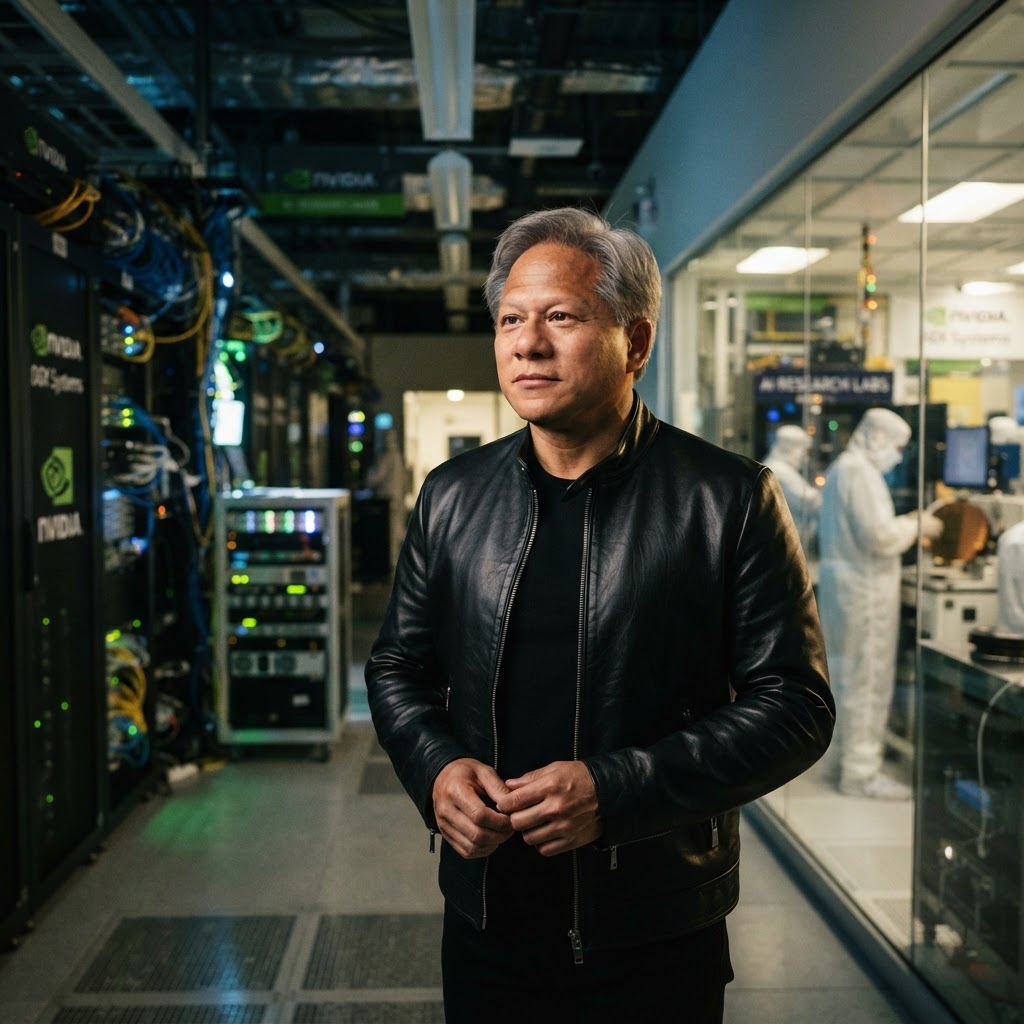
Nvidia chief executive Jensen Huang resigned on Thursday, ending a 33-year run at the company he co-founded and handing the world's most valuable semiconductor business to interim leadership at the worst possible moment for the artificial intelligence economy.
The immediate financial damage was severe. Nvidia's market value fell below $4 trillion for the first time since July 2025, capping a week in which the stock slid to its lowest multiple of expected earnings in 14 years. The company reports quarterly results on Tuesday, and it will do so without the founder who has narrated every earnings call, product launch and policy fight for a generation.
Jensen Huang, who co-founded Nvidia in 1993, resigned as chief executive on Thursday.
What triggered the resignation
The board met on Wednesday night to discuss Huang's future after a week of disclosures that moved far beyond the usual executive misconduct story and into national security territory.
Huang, 63, was reported to have had a relationship with a woman identified by U.S. intelligence as a suspected Chinese intelligence asset. The woman, Alice Huang, is a former executive at Singapore-based Megaspeed, Nvidia's primary business partner in Southeast Asia. Megaspeed has itself been under investigation over whether it helped Chinese companies obtain access to a $4.8 billion stock of powerful Nvidia chips.
The New York Times then reported that Huang had also had an extramarital relationship with an Nvidia vice president who reports to him, and Reuters reported a second intimate relationship with a company employee. The board hired outside counsel to investigate, and the independent directors have said they intend to continue that investigation even though Huang has left.
The exposure is no longer only corporate. The FBI, Congress and the company are all examining the matter, and Nvidia faces a shareholder class-action lawsuit. Huang has agreed to testify before the House Foreign Affairs Committee, according to Chairman Brian Mast, while Senate and House Democrats have opened their own inquiry into the administration's plans to approve AI chip sales to Chinese buyers.
President Donald Trump, who counts Huang as a close ally on export policy, said this week that Huang told him he had "absolutely no idea" who he was involved with.
A governance vacuum at the center of the AI boom
The board moved quickly. Nvidia named chief financial officer and executive vice president Colette Kress as interim CEO, and appointed Harvey C. Jones as its first-ever board chair after three decades as a venture investor.
That is a conventional crisis response, and the market has treated it as such. But Nvidia has never been a conventional company. It is unusually flat for a firm of its size, and its strategy has been inseparable from one person's judgment about which architectures to bet on, which customers to prioritize when supply is short, and how aggressively to engage with Washington.

Nvidia named its finance chief interim CEO and created a board chair role for the first time in the company's history.
Aleksandar Tomic, associate dean for strategy, innovation and technology at Boston College, told Al Jazeera that the resignation "will have an outsized effect compared to a similar event at another large corporation given the relatively flat structure of Nvidia." He still described it as a "speed bump," adding that Nvidia "is a strong company with a strong product, and this is a sudden event, not a product of corporate struggle."
Why the damage spreads beyond Nvidia
Nvidia supplies the overwhelming majority of the accelerators used to train and run frontier artificial intelligence models. That position means a crisis at the company is not a single-stock story; it is an input into the capital plans of every hyperscaler, model lab and sovereign AI program on earth.
Three transmission channels matter.
Supply allocation. When demand exceeds supply, someone decides who gets chips first. With an interim CEO and a board consumed by an investigation, those decisions become slower and more contested, and customers with multi-year buildout schedules price in that risk immediately.
Roadmap credibility. Nvidia's customers plan data centers years ahead around promised generational leaps in performance and efficiency. A leadership transition invites doubt about cadence, and doubt about cadence is enough to move procurement budgets.
Policy exposure. Huang was the industry's most effective advocate for loosening export restrictions. His departure removes the sector's principal channel to the White House at the exact moment Congress is escalating its scrutiny of chip sales to China.
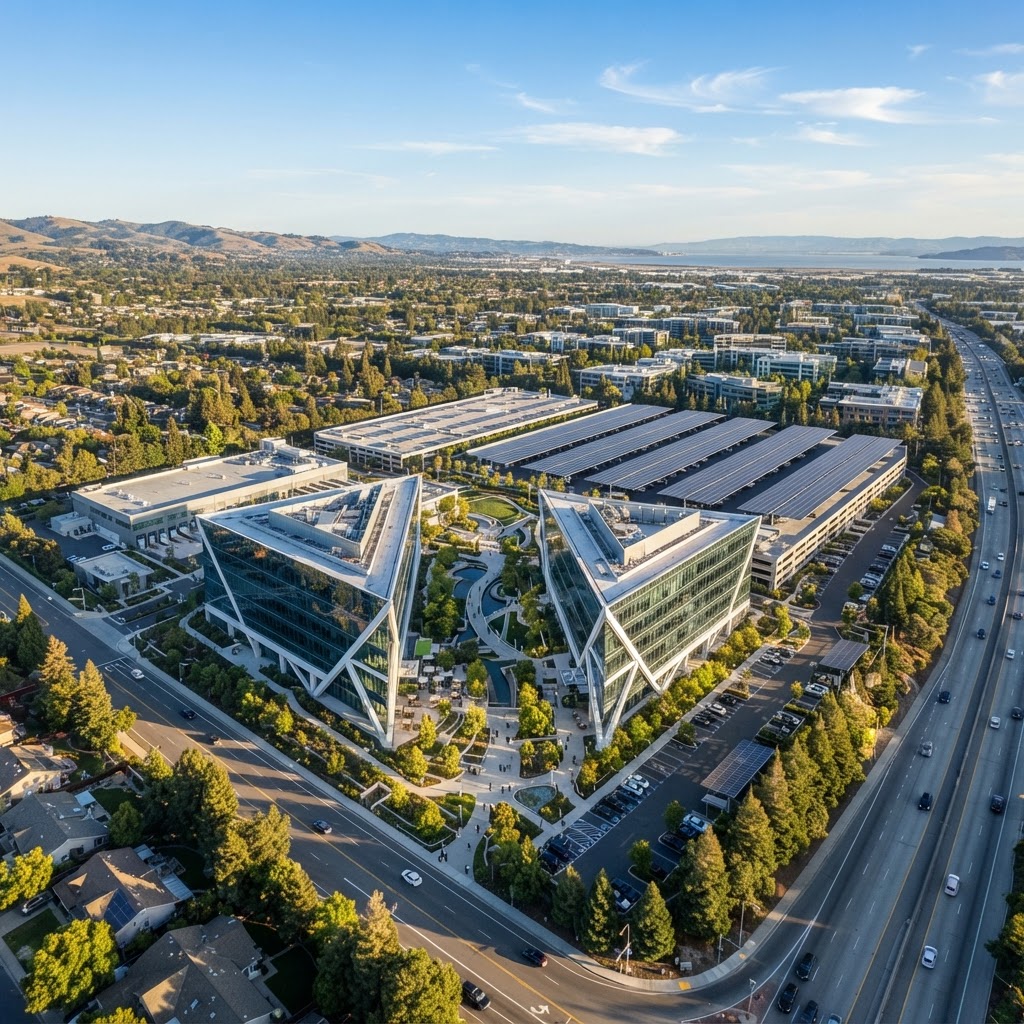
Nvidia's campus in Silicon Valley, where a leadership crisis is now colliding with a policy fight over chip exports.
The broader market reaction has been telling. Nvidia has functioned as the bellwether for the entire AI trade, and any sustained de-rating of the stock feeds directly into the cost of capital for AI infrastructure, data center developers and the startups that depend on cheap compute and enthusiastic venture funding.
The national security question that outlasts the CEO
The most consequential part of this story is not the affair. It is what the intelligence services believe may have been exposed.
A suspected foreign asset with access to a chief executive's private conversations is a counterintelligence problem, and the questions being asked — what was said about export controls, about customers, about unreleased products — do not disappear when the executive does. Congress will hold hearings. Regulators will review how chip flows to Southeast Asia are audited. Companies that route sales through regional distributors should expect far more documentation.
For the AI industry, that likely means tighter end-use verification, slower approvals for exports to third countries, and a more adversarial tone from Washington toward the sector generally. Every chip company now has a governance and compliance problem it did not have in October.
What it means for the future of AI
Near term, volatility. Expect earnings-season noise, guidance uncertainty and a rotation toward alternatives. Advanced Micro Devices, custom silicon programs at the hyperscalers, and inference-optimized startups will all get a closer look simply because boards now want a second supplier.
Medium term, succession as strategy. The single most important signal to watch is who becomes permanent CEO. An operating executive from inside the company implies continuity of the platform strategy. An outsider implies restructuring. Either way, the CUDA software moat remains the company's strongest asset, and it is far harder to damage with a management crisis than a manufacturing one.
Long term, a governance reset for AI infrastructure. The episode will accelerate demands that AI infrastructure be treated more like critical infrastructure: audited supply chains, clearer export compliance, real board oversight and succession plans for founder-executives whose personal relationships now carry systemic weight.
For founders, the lesson is concrete. Concentration on a single supplier, a single model provider or a single platform is a risk that belongs in the board deck, and enterprise customers are already asking harder questions about it. For investors, the trade has shifted from "who sells the most chips" to "which companies have the governance and the supply relationships to keep selling them."
The bottom line
Nvidia remains profitable, dominant and technically ahead. Nothing in this scandal changes what its products can do. But confidence is the currency of a $4 trillion company, and this week it spent a great deal of it.
The company's interim leadership has weeks, not quarters, to stabilize supply commitments, reassure the largest customers in the world and show Washington that the controls around its most sensitive technology still hold. Silicon Valley will be watching a finance chief and a newly created board chair for signals about the future of artificial intelligence itself — because for the past decade, the two questions have had the same answer.
This article draws on reporting from Al Jazeera, NBC News, Reuters, Bloomberg and The New York Times.